
What Happens During a Nightly Security Patrol? A Step-by-Step Walkthrough
Nightfall transforms the world in subtle but profound ways. Streets quiet down, businesses close their doors, and the rhythm of life slows. However, for professional security personnel, this marks the beginning of one of the most critical operations in ensuring safety and order: the nightly security patrol. In communities like Lake Havasu and elsewhere, a reliable security patrol schedule is essential not just for protecting property but also for providing peace of mind. But what exactly happens during one of these nightly rounds? Understanding the steps involved in nightly guard routines sheds light on how a thoughtful patrol strategy helps protect homes, businesses, and public spaces.
Preparing for the Night: Gearing Up and Getting Briefed
The nightly security patrol doesn’t start when the guards step onto a property — it begins well before that. Preparation is one of the most important aspects of a successful shift. Security officers typically report to a central office or security hub where they receive their assignments for the evening. This assignment includes reviewing the security patrol schedule, which outlines which locations need patrolling, what times the patrol should occur, and any specific instructions based on past incidents or emerging concerns.
At this stage, security officers undergo a briefing session where supervisors share key information. For instance, if there were suspicious activities reported near a commercial plaza in Lake Havasu the night before, officers assigned to that area will be instructed to increase vigilance and possibly adjust their patrol strategy accordingly. Officers check their communication gear, radios, flashlights, GPS trackers, and body cams if required. Their vehicles, if used, are also inspected for fuel levels, lighting, and emergency kits.
This preparation is vital because once the patrol begins, there may be little room for error or improvisation. An effective nightly patrol hinges on planning — knowing what to expect and being ready for the unexpected.
Active Patrolling: Visual Checks and Route Coverage
When a security patrol begins, the guard embarks on their assigned route. Depending on the area, this may involve traveling on foot, driving a vehicle, or a combination of both. Patrol officers in Lake Havasu, for example, might need to check gated communities, waterfront businesses, boat docks, and residential neighborhoods during a single shift.
One of the primary tasks during this phase is performing thorough visual inspections. Guards look for signs of break-ins, vandalism, unauthorized vehicles, trespassers, broken windows, and any other anomalies. At commercial properties, they ensure that doors are locked, alarms are set, and all lights are functioning. At residential complexes, they confirm that common areas like laundry rooms, garages, and pool facilities are secure.
Another critical aspect of nightly guard routines is unpredictability. An effective patrol strategy doesn’t follow the exact same route or timeline every night. Doing so would allow would-be criminals to learn the pattern and exploit it. Varying the patrol route keeps the patrol unpredictable and enhances its deterrent effect. If guards walk through a retail strip at 10 p.m. one night, they might do so at midnight the next. Random timing creates uncertainty for anyone observing.
Guards often document their patrols with check-ins, either via a mobile app or by scanning QR codes placed strategically around the premises. These timestamps and digital markers serve as proof of presence and create accountability. In some cases, live GPS tracking is employed so that a central dispatch center can monitor the progress of the patrol in real time.
Identifying and Responding to Security Concerns
As guards proceed along their route, they remain highly alert for anything out of the ordinary. Knowing what security patrols look for is key to appreciating the complexity of their job. They are trained to identify subtle clues that may indicate a problem — a propped-open back door, flickering security lights, unfamiliar vehicles parked in restricted zones, or even odd noises like breaking glass or forced entry attempts.
If a situation arises, response time and decision-making are critical. A barking dog behind a fence may not warrant intervention, but a broken window at a closed office certainly does. The guard’s response depends on company protocols and the severity of the incident. For example, if there is an intruder on the property, the officer may need to call law enforcement while maintaining a safe distance and relaying real-time updates. For less urgent matters like a malfunctioning light, the guard may simply note it for the maintenance team.
Patrol officers may also encounter individuals during their rounds — late-night employees, residents, or delivery drivers. Part of their role is to engage politely but firmly when necessary, verifying identities or offering assistance while maintaining a posture of authority. Interpersonal skills are essential here; a good security officer knows how to diffuse tension and communicate clearly without escalating the situation.
All incidents, no matter how minor, are logged into a report. These logs serve as essential records for both the security company and the client. Over time, patterns may emerge, allowing for a more refined patrol strategy. For example, if a particular property in Lake Havasu regularly experiences loitering near a rear alley, the security schedule can be updated to include more frequent patrols in that area during key times.
Maintaining Presence and Deterrence Throughout the Shift
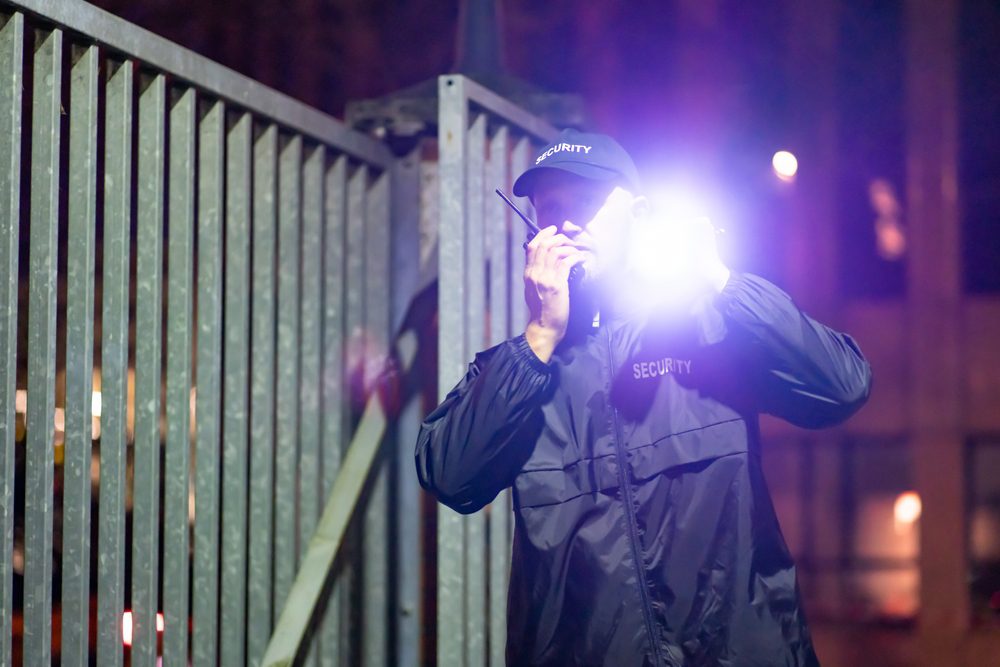
Even when no direct threats are encountered, nightly patrols serve a crucial function simply by their visible presence. A uniformed guard with a flashlight or a marked vehicle patrolling a darkened street sends a clear message: this property is being watched. That visibility deters criminal activity before it starts, which is the ultimate goal of any patrol strategy.
Security guards don’t just move from point A to B; they deliberately linger in high-risk zones, pause at entry points, shine flashlights into dark corners, and make themselves noticed. This “show of force” makes the property less appealing to potential intruders. The more consistent and professional the patrol appears, the more effective it becomes as a deterrent.
For many clients — whether property managers, homeowners’ associations, or retail operators — peace of mind is the most tangible result of a security patrol. Knowing there is a trained professional actively monitoring their property at night creates a sense of safety and confidence.
In Lake Havasu, where tourist traffic can spike during certain seasons and waterfront properties are at greater risk of after-hours trespassing, patrols play a significant role in keeping crime at bay. Having a well-coordinated and visible nightly guard routine can make a measurable difference in community well-being.
Debriefing and Reporting: Wrapping Up the Night
As the night draws to a close and the final rounds are completed, security officers return to the base or check in remotely to wrap up their shift. This final phase is just as important as the patrol itself. Guards compile detailed reports documenting all patrol stops, incidents encountered, observations made, and any actions taken. These reports become part of the ongoing record and are often reviewed by supervisors or property managers the following morning.
If any issues were identified that require follow-up — such as broken locks, suspicious individuals, or repeated patterns of activity — these are flagged for investigation. This information is vital in refining future security patrol schedules and improving overall property safety. The feedback loop created by nightly reports allows for better resource allocation, updated patrol maps, and improved threat anticipation.
Some security firms use integrated platforms that sync reports with property management systems, allowing clients in Lake Havasu and elsewhere to receive immediate notifications, images, and videos from the patrol. Transparency and accountability are enhanced through this digital integration, and it helps build trust between security providers and their clients.
For the guards, debriefing offers an opportunity to reflect on the night’s challenges and successes. It’s a moment to recalibrate, rest, and prepare for the next shift. Although the job may seem routine, each night presents a new set of dynamics — changing weather, shifting foot traffic, and unpredictable human behavior — all of which require vigilance and professionalism.
Conclusion
Nightly security patrols are far more than just walking around with a flashlight. They are complex, dynamic operations that combine planning, observation, human interaction, and critical response. From the structured security patrol schedule to the nuanced understanding of what security patrols look for, every step of the nightly guard routine contributes to a safer environment. Whether you’re in Lake Havasu managing a waterfront condo, overseeing a commercial property, or simply curious about how private security operates, understanding this process offers a new appreciation for the quiet protectors who stand watch while the rest of the world sleeps.
Need a Security Guard Company in Lake Havasu City, AZ?
Mohave Security LHC is your trusted partner for around-the-clock protection through our versatile and reliable security solutions. Whether you need event security in Arizona, professional guard services for your business, or 24/7 security services in Lake Havasu City, we have the expertise and resources to meet all your security needs with professionalism and care. With a focus on excellence, integrity, and customer satisfaction, we are committed to providing top-quality security services that give our clients peace of mind and confidence in their security measures. Contact us today to learn more about what we can do for you!
